'Accessible Life: Beyond Boundaries' Panel Held at Our University

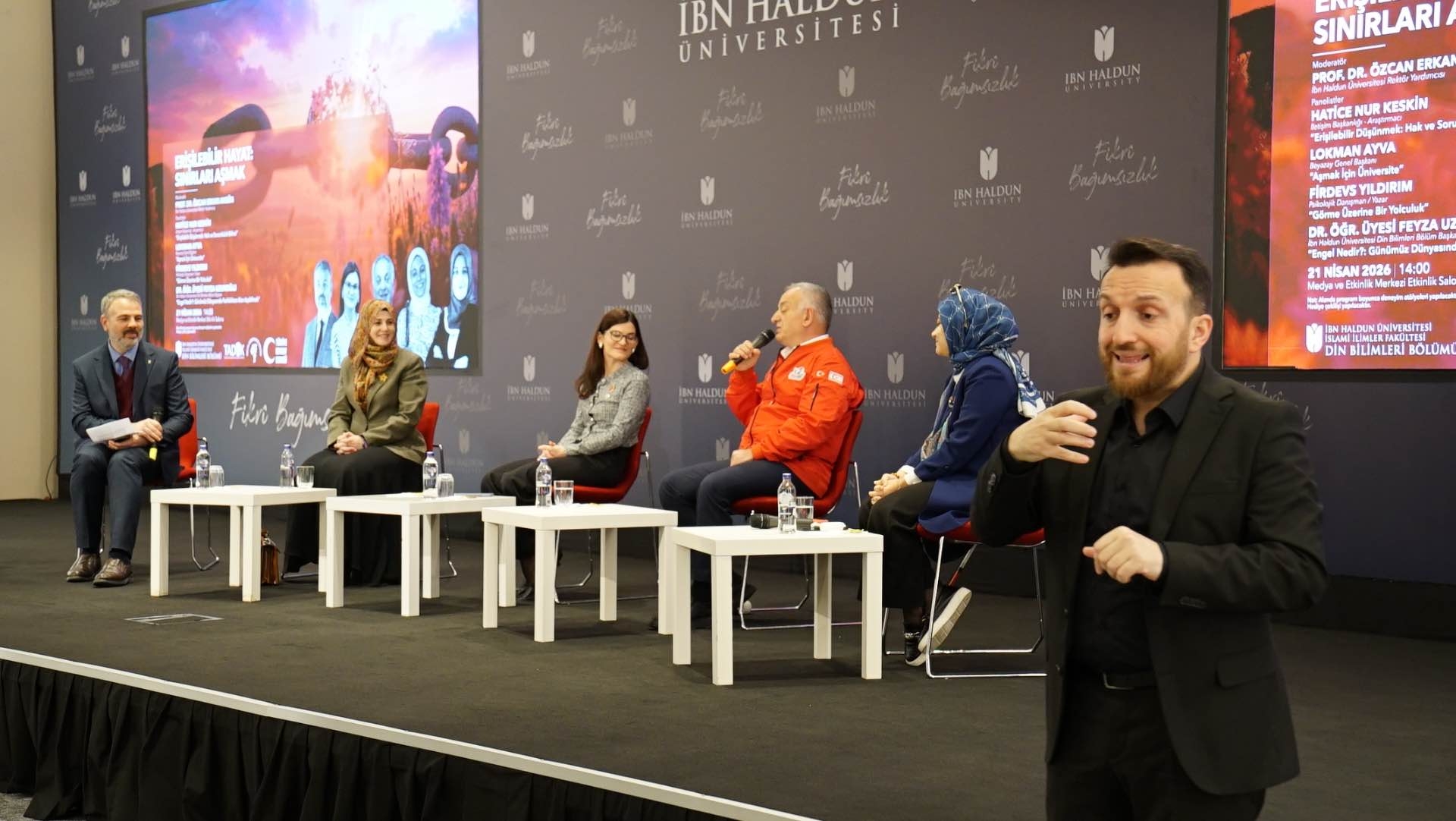
The “Accessible Life: Beyond Boundaries” panel was held at our University, bringing the concepts of disability, inclusivity, and accessibility to the forefront and raising awareness on these matters.
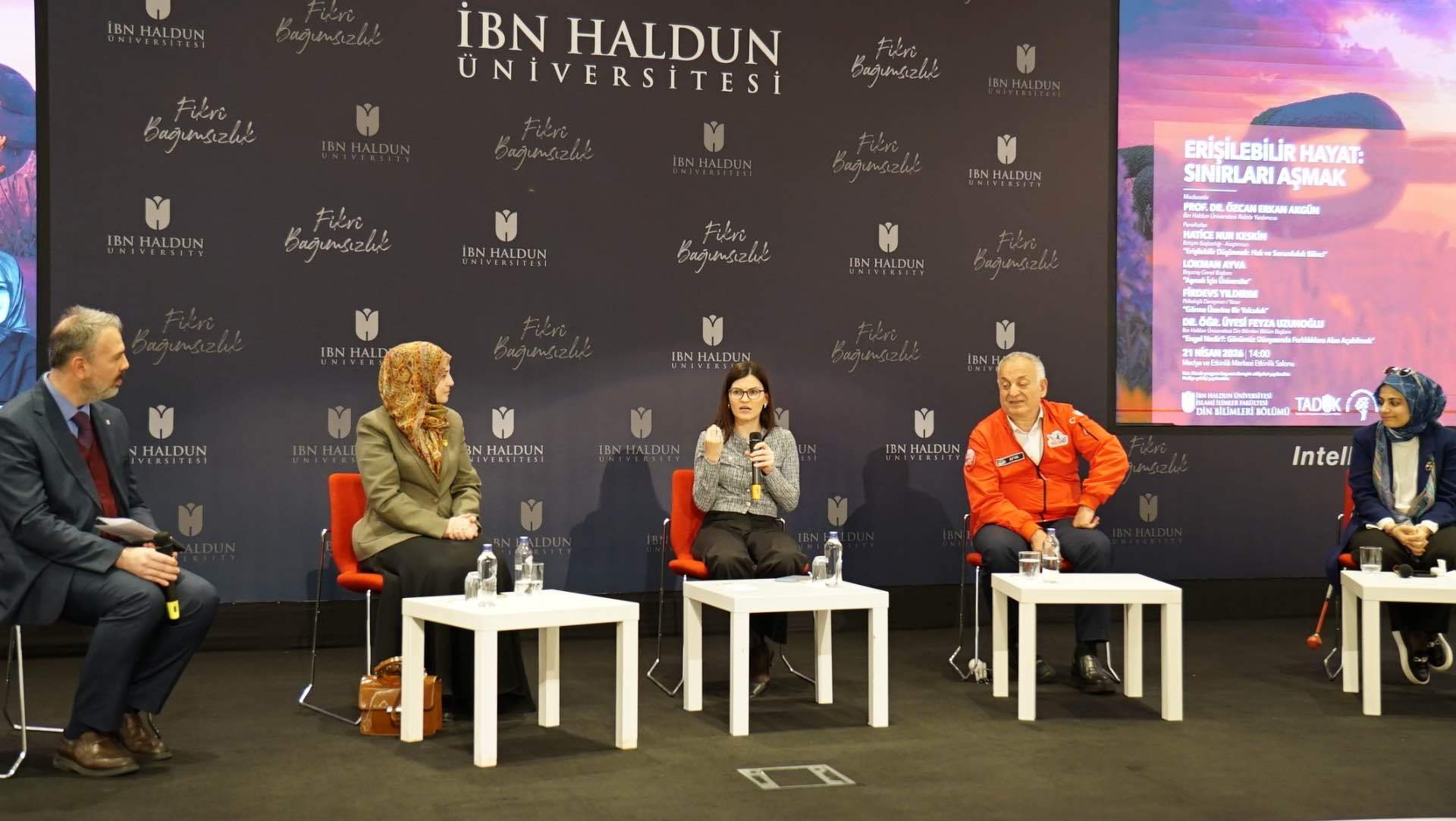
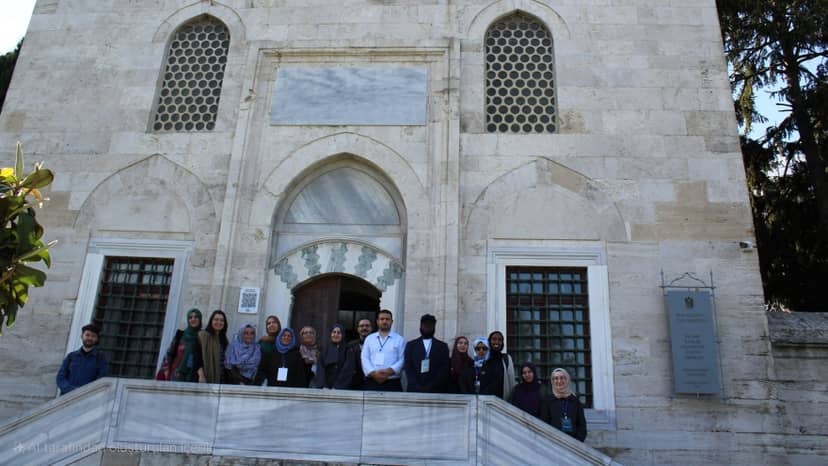
Organized by the Department of Religious Studies under our School of Islamic Studies, in cooperation with the Social Research and Thought Club (TADÜK), the Social Responsibility Club, and the Türkiye Beyazay Association, the “Accessible Life: Beyond Boundaries” panel was held at our University on April 21, 2026.
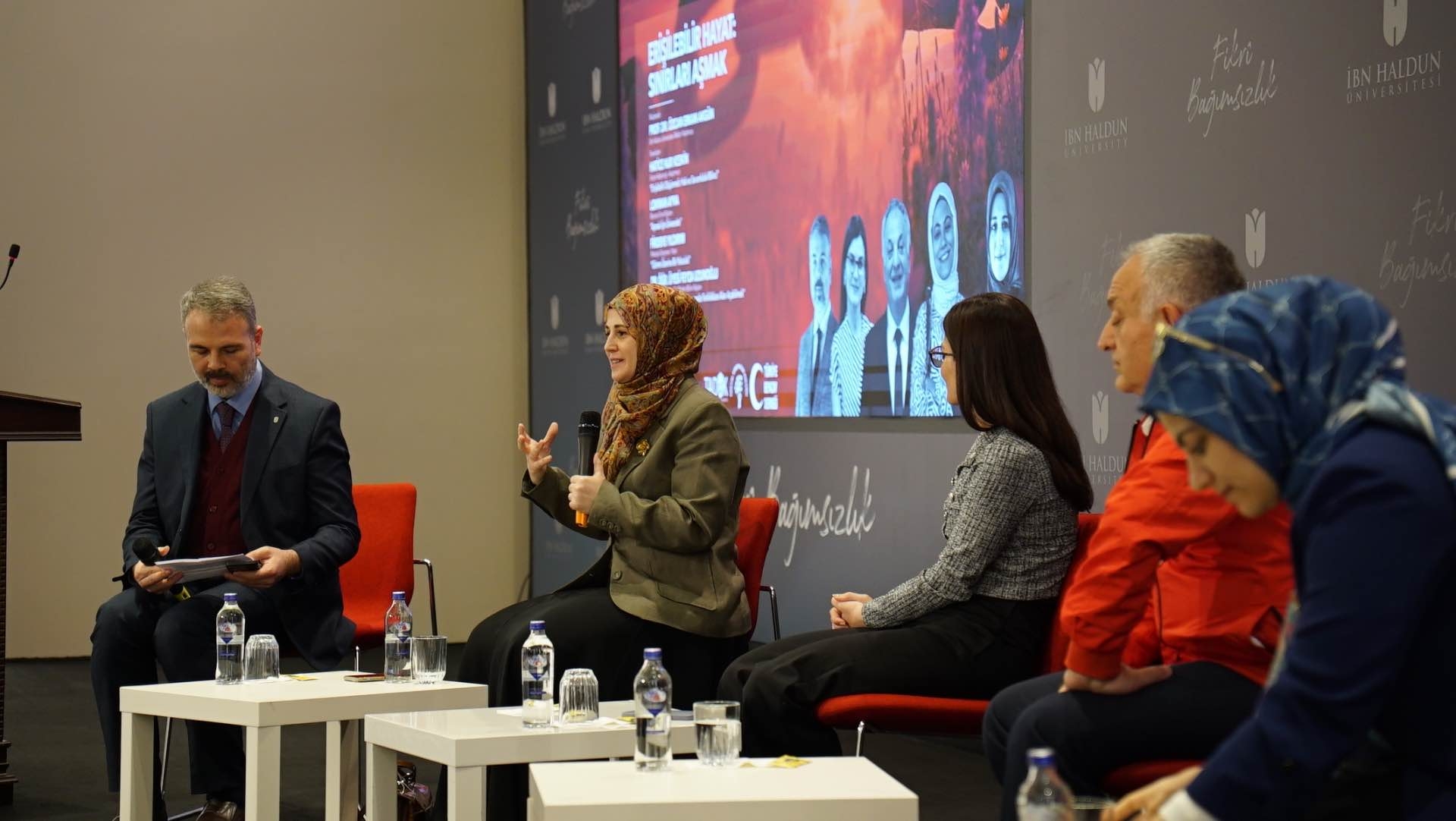
The event was moderated by our University's Vice Rector, Prof. Özcan Erkan Akgün. The panel featured Hatice Nur Keskin, Researcher at the Directorate of Communications; Lokman Ayva, President of the Beyazay Association; Firdevs Yıldırım, Psychological Counselor and Author; and Asst. Prof. Feyza Uzunoğlu, Head of the Department of Religious Studies, as speakers.
In the context of inclusivity, the panel discussed how to prevent individuals with disabilities from being overlooked, how to facilitate their lives, how to improve their access to education and social rights, and how to better integrate them into social life.
Prof. Özcan Erkan Akgün, the Vice Rector of our University, emphasised in his speech that Ibn Haldun University's vision blends modern technologies with the strength of its cultural and civilizational heritage. He stressed that the university approaches accessibility with great institutional sensitivity and stands “firmly against inaccessibility”. Prof. Akgün noted that human qualities and uniqueness are a form of grace, and that life presents a social test shaped by mutual relationships. He stated that developing a culture of coexistence and ensuring accessibility across all areas are requirements for this delicate balance. He extended his thanks to all stakeholders who contributed to organising the program.
In her presentation titled “Thinking Accessibly: Awareness of Rights and Responsibilities”, Hatice Nur Keskin referred to her work, “The Century of Türkiye, the Century of Accessibility” the first published part of the Bilgi Dosyası by Directorate of Communications, highlighting how accessibility, through small efforts, can pave the way for significant conveniences. She stated that empathy alone is insufficient and must necessarily translate into action. Keskin provided information on current and necessary activities in this field.
Lokman Ayva, in his speech “The University as a Means to Overcome”, discussed the transformative role of university education in the lives of individuals with disabilities, drawing from both his personal experience and the work of the White Crescent Association.
Firdevs Yıldırım, with her title “A Journey on Seeing” shared with the audience reflections on the impact of visual impairment on daily life and inner experience. She emphasised that seeing is not only about the eyes but also encompasses aspects such as speech and communication, which can create both ease and difficulty in the lives of visually impaired individuals.
Assist. Prof. Feyza Uzunoğlu, in her talk titled “What is a Disability? Making Room for Differences in Today's World”, underlined that universities, with their intellectual capital, are among the primary kitchens of social transformation, highlighting the importance of such awareness initiatives. She stressed the need for improvements in both curriculum and accessibility to better support individuals with disabilities, particularly in education.
Assist. Prof. Uzunoğlu noted that society's level of awareness needs to become more respectful and open-minded towards differences. She expressed that fostering inclusivity through the Qur'anic concept of the “Reasoning Heart” is both an academic and moral responsibility.
The common emphasis throughout the panel was that an inclusive and accessible approach is not solely the responsibility of those working in this field but of all segments of society. Throughout the program, workshops held at the event venue allowed participants to engage directly with accessibility issues. A gift drawing was also held as part of the program.
The event was notable both for making the university's commitment to disability issues visible and for bringing together speakers from diverse disciplines at the same table.
Photos
Related Content
Asst. Prof. Feyza Uzunoğlu and Our Graduate Student Rukiye Gedikli Present Two Papers at the 3rd International Mesopotamia Congress
Asst. Prof. Feyza Uzunoğlu Saçmalı Presented at the 59th Leeds International Medieval Congress
Büşra Sıdıka Kaya Examines Bosnia's Intellectual Heritage and Resilience in International Sarajevo University
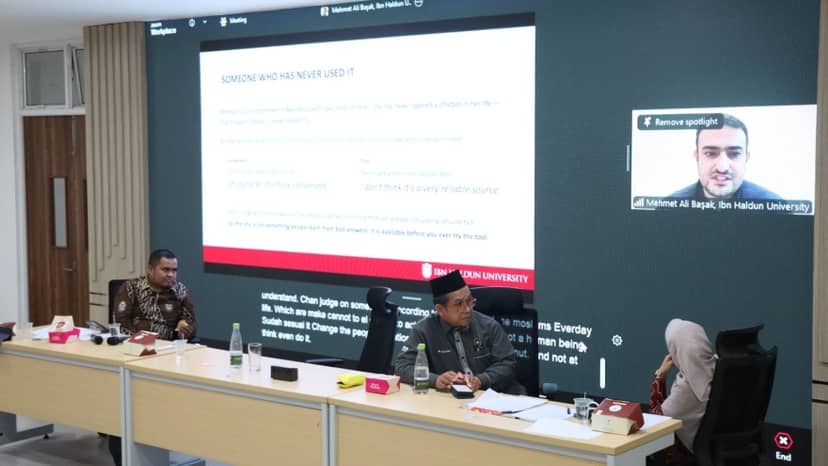
Assist. Prof. Mehmet Ali Başak Invited as a Speaker at the International Conference Themed “The Future of Islamic Law and Artificial Intelligence”
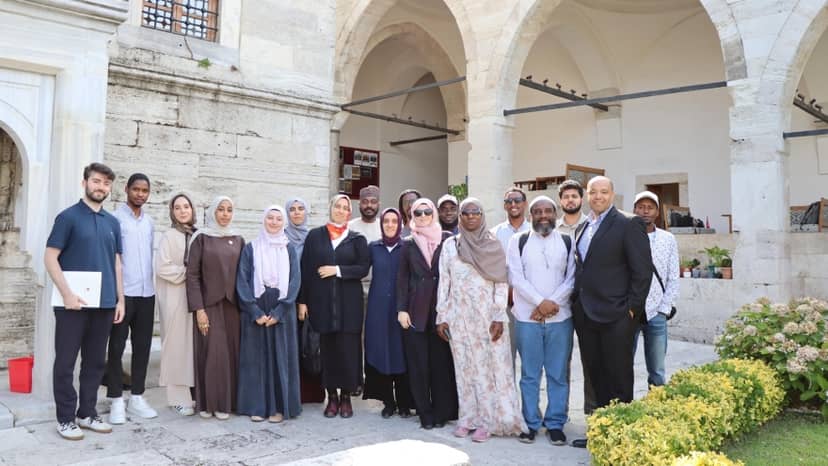
International AISSHA Program Held Under the Leadership of the School of Islamic Studies Department of Philosophy and Religious Studies
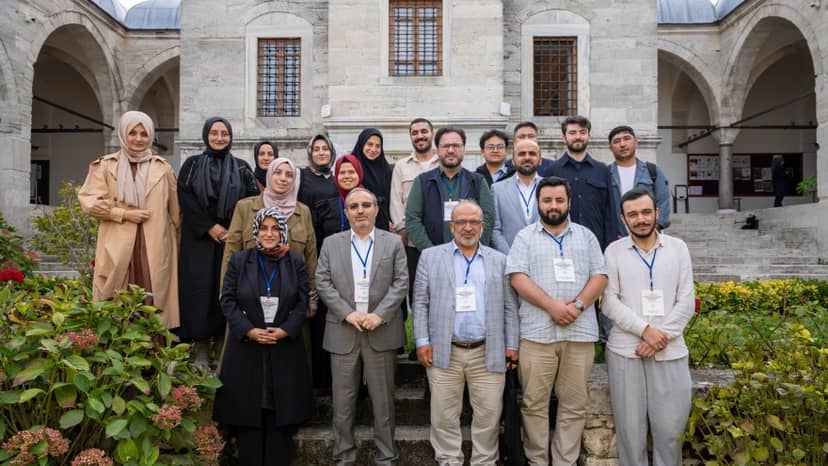
“Reflections of Necessity: The Application of the Principle of Necessity from a Bio-Fiqh Perspective” Workshop Held in Salis Madrasa
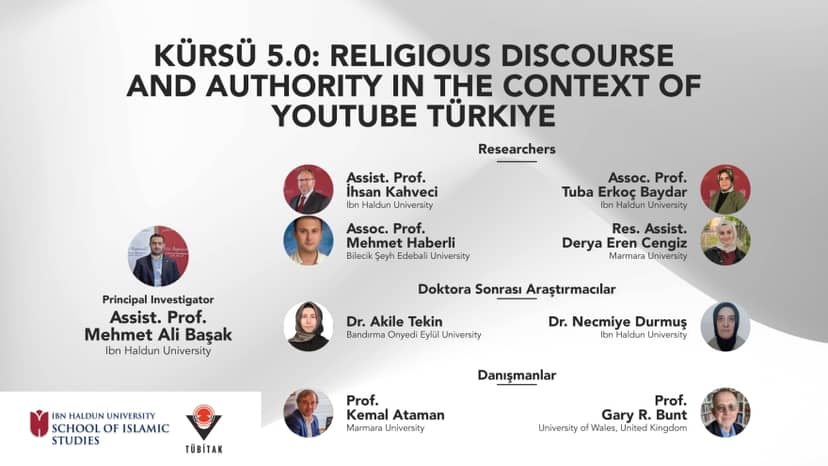
“Kürsü 5.0” Project Led by Assist. Prof. Member Mehmet Ali Başak Receives TÜBİTAK 1001 Funding
School of Islamic Studies Held “Understanding Muslim Subjectivities in Local and Global Contexts”