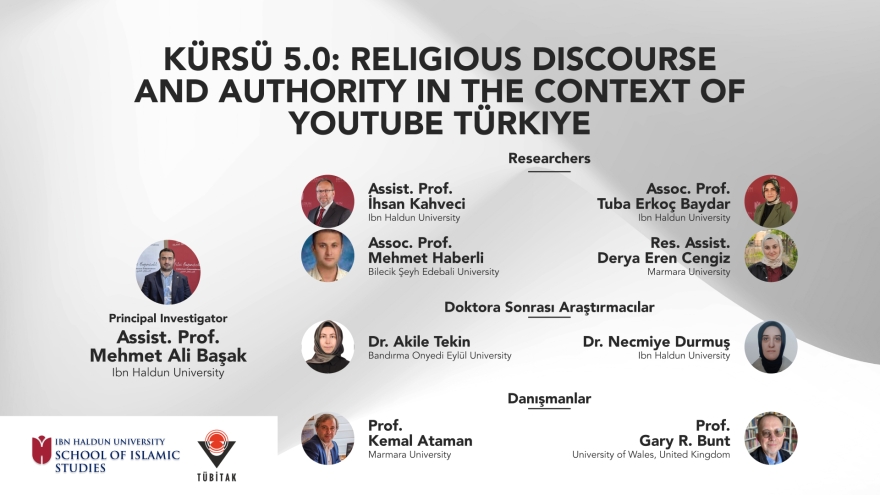
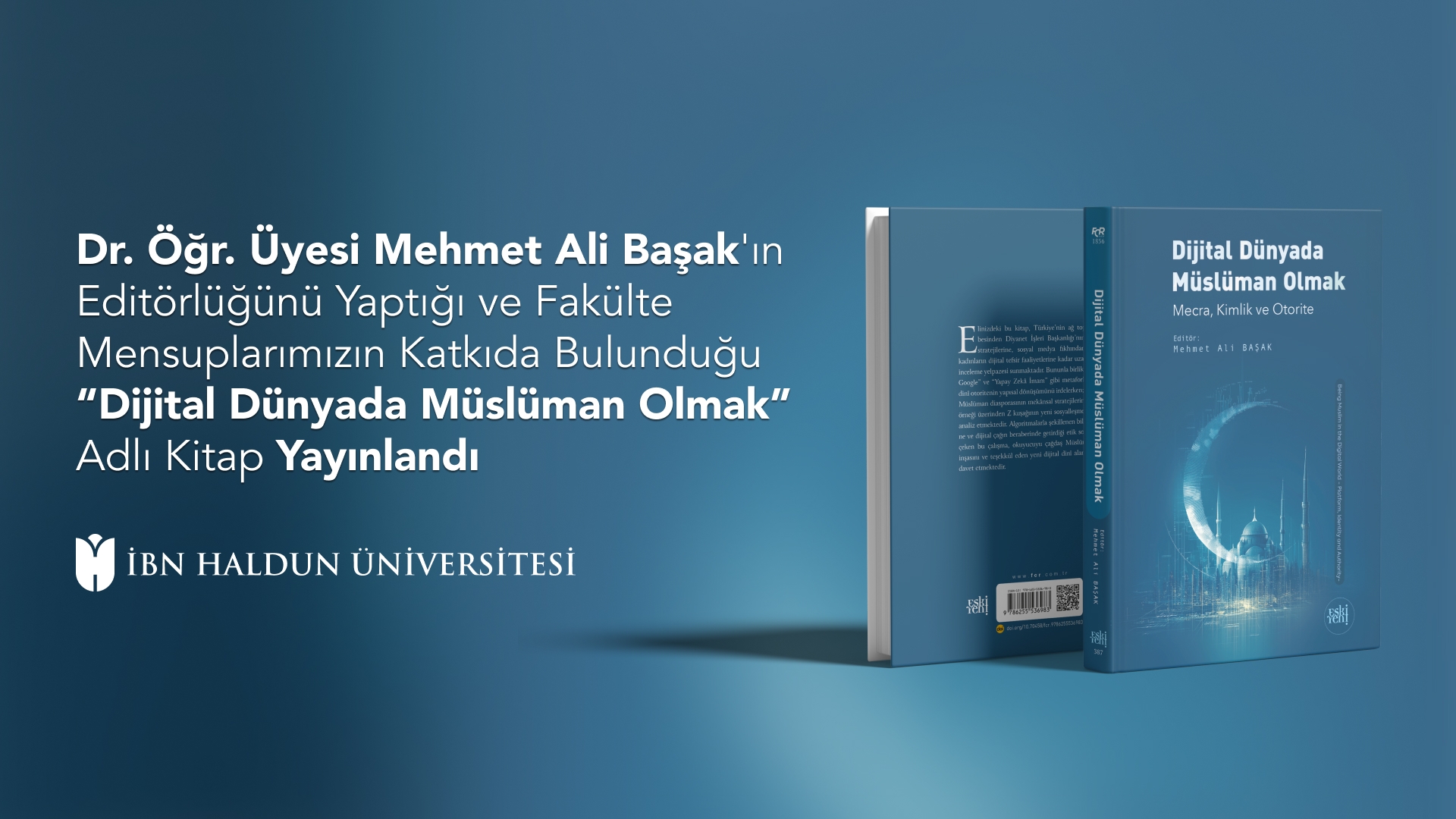
The edited volume titled “Being Muslim in the Digital World” (Dijital Dünyada Müslüman Olmak), prepared under the editorship of our School of Islamic Studies member Asst. Prof. Mehmet Ali Başak, has been published by Eskiyeni Publications and presented to the attention of researchers and readers in February 2026.
In the twenty-first century, the internet and digital technologies have moved beyond being mere communication tools, transforming into a new medium where faith, identity, and religious practices are experienced. Centering on the concept of the “Cyber Islamic Environment”, the book examines the sociological impacts of digitalization on the belief, practice, and socialization processes of Muslim communities. In today's world, where the boundaries between the virtual and physical realms are increasingly blurred, the book focuses on “hybrid” religious experiences where online and offline spaces don’t mutually exclude one another.
Religious Structural and Social Transformation
The work covers a broad spectrum of research, ranging from Türkiye's network society experience to institutional digitalization processes. Current issues such as the digitalization strategies of the Presidency of Religious Affairs (Diyanet), social media fiqh, and the tafsir activities of Muslim women on digital platforms are discussed in detail. Furthermore, the study analyzes the structural transformation of religious authority through concepts like “Sheikh Google” and the “AI Imam” the information hierarchy shaped by algorithms, and the new ethical issues brought about by the digital age. The spatial strategies of the Muslim diaspora in Canada and the new socialization codes of Generation Z, examined through a field study in Üsküdar, are among the other important themes included in the context of field research.
Several Members of Our Faculty Provided Contributions to the Volume as Contributing Authors
Our faculty members have also contributed to the work as chapter authors. Faculty members Asst. Prof. İhsan Kahveci, Assoc. Prof. Tuba Erkoç Baydar, and Asst. Prof. Mehmet Ali Başak, visiting researchers Dr. Necmiye Durmuş and Dr. Akile Tekin, and our master's graduate Emine Umaç have contributed with their chapters.
We congratulate our faculty members and our graduate for their contributions.